
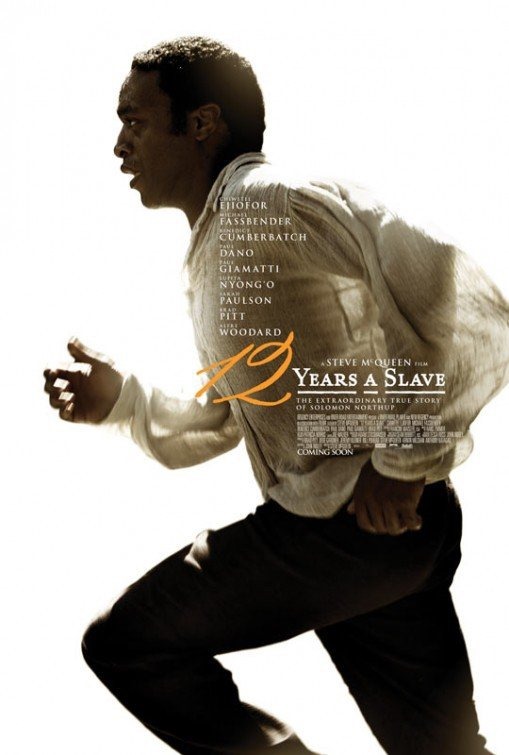
 By now you’ve no doubt heard the buzz about Steve McQueen’s bloody, brutal new film 12 Years a Slave. Set in the Antebellum South, 12 Years tells the story of Solomon Northrop, a free Northern black man who’s kidnapped and sold into slavery.
Right off the bat, let me add to the accolades: 12 Years a Slave is beautiful. It’s well-acted. It’s the sort of film that, as the credits roll, feels important.
I felt awful at the film’s close – which very much seems to be the film’s purpose. (That’s not necessarily a criticism – plenty of amazing films don’t leave me feeling happy afterwards. Gone Baby Gone and Arlington Road leap immediately to mind). Of course, 12 Years a Slave played on my white guilt. Not only am I a person of relative privilege – I grew up in a suburban home with two parents who both have post-graduate degrees, etc. etc., but at least one of my direct ancestors was a Virginia plantation owner.
I’m not alone in my discomfort: several black reviewers have noted the film provoked a similar response in them – shame and degradation.
The question, then: is the shame and guilt 12 Years a Slave fosters in its viewers a good thing? I say No, it’s not.
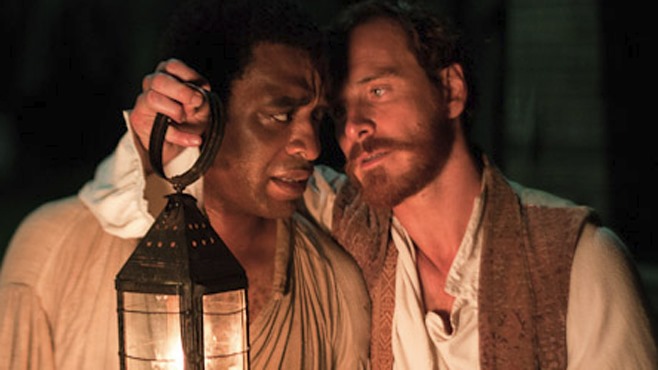 Not because depictions of violence are always in-and-of themselves bad. When violence is depicted on screen, we should ask: why? What purpose does the violence serve? What effect does it have on the story? What affect does it have on us, the audience? (We can and should ask the same of other aspects of the film, including sexuality and langauge.)
The question, then is Does the violence and dehumanization pay off? I didn’t find the final scene redemptive. Sweet? Yes. Relieving? Absolutely. But did a fumbling, inappropriate apology and an awkward embrace rehumanize Solomon Northrop after 2 hours of unrelenting brutality? Not in my book. (If it worked for you, the rest of this won’t make a lot of sense.)
So: because the ending lacked sufficient redemption, 12 Years a Slave creates shame, guilt and degradation in its viewers, but doesn’t do anything with them. We’re meant to feel these feelings for the sake of feeling them. That’s about it. And that’s a big problem.
Shame for shame’s sake isn’t redemptive. It’s condemnation.
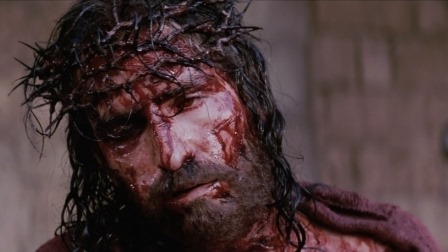 Contrarian movie critic Armond White – whose distaste for the film is already infamous – compared 12 Years a Slave to another brutal, bloody film that likewise feels weighty and important in the moment: The Passion of the Christ. Though Armond mentions the comparison passingly in his review, the two films’ similarities in goal and tone deserve more attention.
Both 12 Years and Passion of the Christ are artistic, beautiful period pieces. But the periods in question are shameful, sinful moments in history: the former our great national shame and the latter the day humanity killed God. Both films invite us to participate in the events by watching. And the viewing experience offers us a kind of salvation from the guilt tied to those events.
Because that salvation based in witnessing the violence itself rather than in triumph over that violence, neither film offers any actual hope for either the victims or the victimizers.
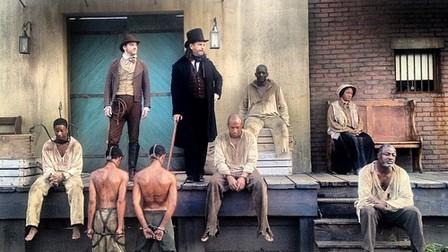 Both 12 Years a Slave and The Passion of the Christ are built on a particular understanding of atonement – of how sin once committed can be made right. The particular theological model is called Penal Substitution, a fancy term that essentially means someone else is punished as a substitute for the sinner.
In the case of The Passion of the Christ, Jesus is suffering on behalf of all humanity. In the case of 12 Years a Slave, it’s a bit trickier: we as the viewers are invited to sympathize with Solomon; he’s the clear protagonist. As we watch him (and his fellow slaves) suffer, we suffer with him. The effect – for me and for everyone I’ve talked to who’s seen the film – was exactly the same as their viewing of Passion of the Christ:
Because we know the story is true, we are compelled not to turn away. To watch. To face up to the brutal, bloody truth of the matter. By watching the suffering, the films become cathartic – they allow us to experience the horror of the events without actually having to engage the horror in real life.
They show us something objectively awful: in both cases, human beings dehumanized by torture. But it’s through a screen, at a distance. We can participate vicariously, without getting our hands dirty.
Penal Substitution works when we feel guilt and shame over what’s being wrought. The more guilt, the better.
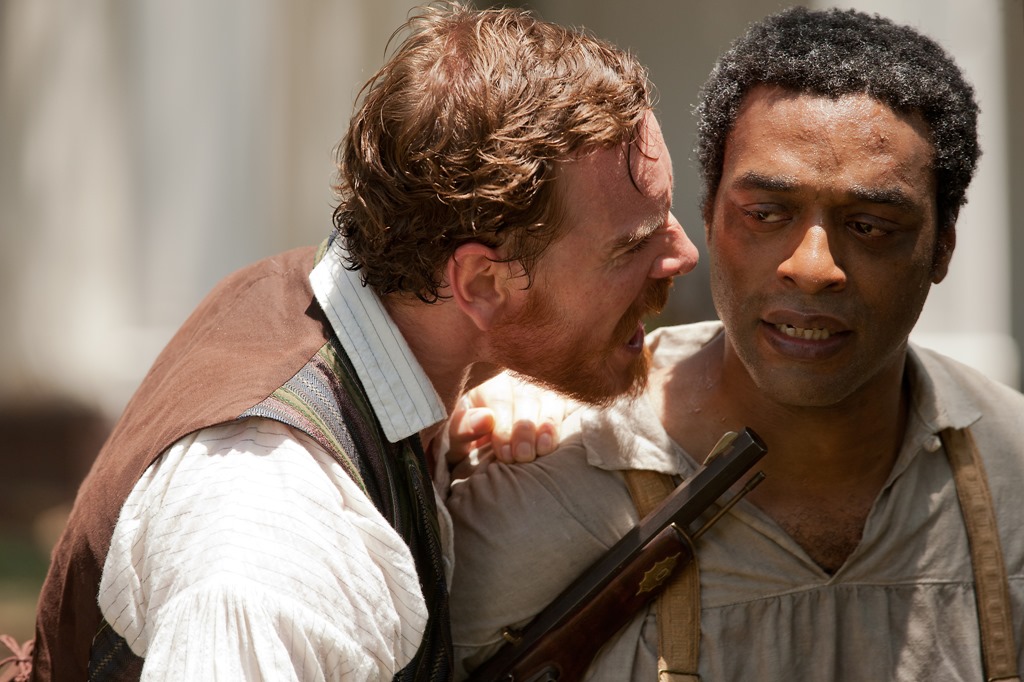 This becomes a vicious cycle: the worse the acts depicted on the screen, the worse we feel in the moment and thus the better we feel later. Films that function the way 12 Years and Passion of the Christ work better the more violence they show. The worse the violence, the more guilt and shame they evoke. In that sense, guilt and shame are easy emotions – easy to depict, easy to manufacture. And powerful enough to be mistaken for helpful motivation.
Armond’s description of 12 Years a Slave as “torture porn” isn’t far off the mark. With it (and Passion of the Christ), we already know the story is bad. We just watch to see how bad it gets before the end. The violence titillates us. The suffering manipulates our emotions, summons guilt and shame and it all comes pouring out as the credits roll in great waves of tears and then we leave.
And it’s over. Because, after all, it was just a movie.
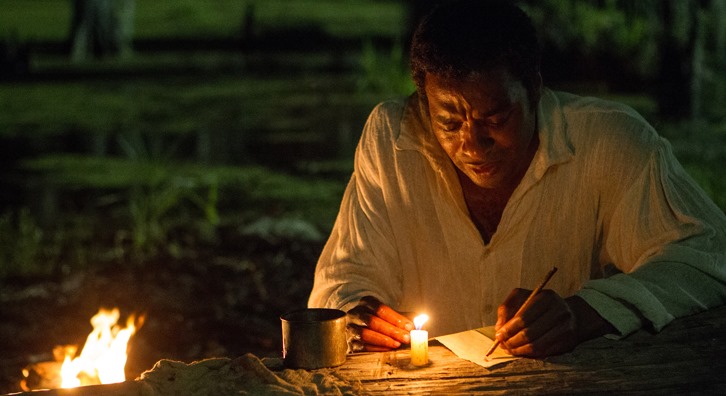 And that’s the real danger of these films. As Joe Morton points out in his excellent HuffPo piece on 12 Years, what we need is not one more depiction of slavery to make us all feel sad. If we’re truly going to conquer race issues, we need to see black heroes and pioneers. Stories of black persons whose hero’s journeys aren’t any different from something we’d see from Liam Neeson, Matt Damon or Angelina Jolie.
In other words, what we need to make films like 12 Years a Slave work is resurrection. Good triumphing over evil. And not as an epilogue, an afterthought like we got in 12 Years (and Passion of the Christ).
But as long as we have films that let us release some pent up guilt, that let us feel like something important happened when all we did was watch a movie, we’ll never move forward. We need stories about redemption, not just about suffering. Suffering by itself doesn’t save. We need resurrection.

7 replies on “12 Years a Slave”
I’m confused: Why isn’t being a witness to violence a kind of redemption? Why is “triumph” the only redemption?
And you say that the movie keeps us from “having to engage the horror in real life”–but I would argue that intellectual, spiritual, and emotional engagement is a very real and moving engagement even if we don’t get our “hands dirty.” You, of all people, JR, I think would know that watching a movie is far from a detached experience.
And frankly, it seems totally inappropriate to me that the movie might “offer hope,” because that would mean denying that we continue to live in a society that has a LONG way to go before the scars of slavery are ameliorated.
Hey Faith!
Thank you for your insights. Could you elaborate more on how bearing witness to violence inflicted on someone else is redemptive? I’m intrigued.
Obviously I agree with you that films can help us engage real-life problems. But in this case, I don’t think that’s the effect this film has. It certainly wasn’t the effect it had on me. The particular problem with 12 Years (and I’d say for Passion too) is that it presents a historical narrative we all already know: America had slaves and it was bad. Nothing in that film was surprising or challenged our dominant cultural assumptions about slavery in any way. Now, if this had been released 50 or 100 years ago? Maybe. But since I (as the viewer) am already on the “slavery is bad” side, the film just confirmed those feelings and didn’t take me anywhere else. And were that only my reaction, so be it. But that’s the general consensus from nearly everyone I’ve heard of who’s seen the film. That’s why I’d argue in this particular film the violence didn’t work and/or wasn’t redemptive.
As for offering hope, the HuffPo piece I linked said it very well, IMO: we don’t necessarily need saccharine, false stories just to feel good. But there are plenty of other stories from that era to tell that offer a more hope-filled and humanizing narrative, stories that could challenge us to be more engaged in continuing race issues today. I wonder if even Northrop’s story could be told in a less victimizing, more humanizing way to accomplish the same purposes.
The best hope-filled narratives don’t deny the brokenness we still live in; they help us to imagine a better world so we can chart out a path to get there.
Thanks again for your engagement. I’m anxious to hear your reply!
I was thinking that the redemption is only made possible through the witnessing because the witnessing is an acknowledgement that wrong has been done in the first place. I guess I thought the function of the movie was to force us to really accept that this is a part of our country’s past–bloody and brutal as it is–which is only the first step to any kind of redemption. In fact, this was the whole reason that people like Solomon Northrup wrote their stories down in the first place, creating the genre of the “slave narrative.” People who had experienced such horrors (also, for example, Holocaust survivors) felt that redemption doesn’t mean “moving on,” it means acknowledging and continuing to try to understand those past wrongs as a first step to figuring out what to do next. Yes, America had slaves and it was bad. But who were the slaves? What were their stories? What happened to them and why and how did they feel about it? It is these narratives that prevent slavery from being just another historical event and more of a a real-life thing that happened to real, live people not all that long ago. In doing so, these stories put us in a position to figure out what we’re going to do about it.
To be clear though, I think this is what such narratives SHOULD do, but I don’t really think this particular movie is all that successful. Does the movie offer us a historical perspective that humanizes a past event in ways that allow us to further understand our present situation? I didn’t especially think so, and I agree with Armond White that a lot of it felt uncomfortably close to watching the latest Saw movie. I was also reminded of Million Dollar Baby, where the movie basically amounts to one terrible thing piled upon another terrible thing as a means of making me feel terrible and winning a bunch of Oscars. There’s something to be said for emotional pacing, and I think the emotional heft of movies like this one can feel like you’re carrying the weight of the world when you leave the theater, and doesn’t leave a lot of room for hope.
I think that a call for “redemptive” stories can be problematic. There was nothing redemptive about this suffering depicted in the film, and about people made into bioeconomies, the legacies of which we can still see today. From what I understand, the film (which I should offer the disclaimer of not having seen yet since it doesn’t come out in the U.K. until January) offers not only an attempt at an historically accurate depiction of slavery, something that does not make it in Hollywood very often, but also a way to look at and think about our present. By saying “slavery was bad, we know it already” is risking being part of a white-dominant universalist way of talking about the past that relegates slavery into a kind of pre-history, a viewpoint that authorizes claims about our “post-racial” present with “reverse racism” etc, a viewpoint which also champions reductive multiculturalist heroes without deeply engaging in the telling and unpacking the systemic, institutionalized, pervasive racism, violence and injustice that has played out and continues to happen in the U.S. You talk about needing a more humanizing narrative, but the very idea of humanity and our popular understanding of human rights was constructed in relationship to the creation of the infra-humanity of slaves and other oppressed peoples historically. Here is another review of the film that offers a critical engagement with what’s at stake in this film for us today, which might offer some different ways to engage with and think about the film. http://www.theguardian.com/commentisfree/2013/nov/10/12-years-a-slave-mcqueen-film-legacy-slavery
Hey Olivia!
Thanks for your thoughtful engagement. So much good stuff in there, I’m going to break my reply into numbers. Not trying to be pedantic or patronizing, just the way I think 😀
1. I’m not sure who the film’s intended audience is. If – as you say – the intent is to make us “look at and think about our present”, 12 Years just didn’t do that for me. I’m a reasonably well-educated person who is aware of the brutality and history of the American slave trade. I’m also very much not waving the “we’re not racist anymore” banner. I believe our country is still deeply racist. And I am convinced much of that is the legacy of the slave trade. All that said, 12 Years didn’t move me anywhere. Maybe that’s because I saw it in the wrong mood? Maybe I’m not the target audience (i’m fine with that). But 12 Years didn’t make me reflect on continuing injustices in economics, education or housing.
2. The larger problem for me is that Solomon Northrop’s story is redemptive. He did get away, and went on to tell his story, to reclaim his name and personhood. But the film doesn’t tell that story. The film explicitly refuses to give the redemptive aspect of his story more than a 3-minute closing scene and some title slides. If this were a film about a person who was just crushed under the slave trade and died there, tell that story. But when the story has a clear redemptive element and you choose to leave it out, to highlight only the pain and suffering, the dehumanizing, then how is the film itself not participating in further dehumanization?
3. I like the article. I don’t agree, but I’m glad someone is taking the conversation on the film somewhere helpful.
4. I’ll be anxious to hear your thoughts if you choose to see the film!
i thought it was a masterful piece that i wouldn’t categorize as “torture porn” at all, in fact, i thought it was the best movie i have seen this year… i think there is value in redemptive stories, but i do not think a story HAS to have an obvious or perfect redemptive element to make it powerful or worthwhile. i often find that non-redemptive stories tell us just as much–if not more about the world as it is. i didn’t feel guilty about slavery when i walked out, i felt like i just watched a critique of the human condition. it’s more proof that we are a people in need of a savior… in need of redemption. that, and when Pitt’s character is introduced, though he never addresses it, he starts spouting humanistic views that i would hope beg the viewer to ask “why? why do we believe the things he says about equality and laws made by men?”
but, i say all that from the perspective that i just love movies that stir discussion, and this is a movie that i wish i could talk to people about for hours… and though i feel i don’t see eye-to-eye with your critique, i do think your view is very thoughtful and worth considering.
Hey Fizz!
I mentioned this in my reply to Olivia below, but what troubles me most about 12 Years is that Northrop’s story (and Jesus’ in Passion) has a clear redemptive ending. He gets home. He goes on to tell his story, to work for the cause of abolition. Why choose not to include that? Why choose only to focus on the pain and suffering, the dehumanizing?
As a viewer, I don’t need any more evidence that humanity is fallen, broken, in need of redemption. I need pictures of that redemption. Possibility that even something as heinous as the American Slave Trade can be redeemed.
Something that just occurred to me: there’s a subtle critique of religion in the film: Northrop is sort of “giving in” when he finally starts singing the slave spirituals. And his final hope doesn’t come from God, but from a humanist (Brad Pitt, as you observe). That’s provocative, particularly given Fassbender’s character’s penchant for quoting Scripture to justify his oppression.