
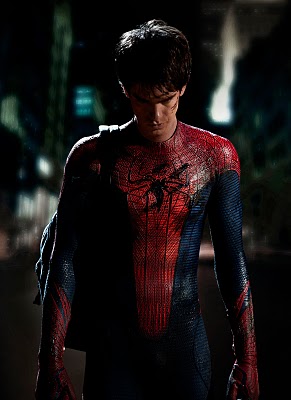
the Amazing Spider-Man
Comics are our culture’s most consistent mythology. The best comics help us understand who and what we are, to reflect on our culture. Near the end of The Amazing Spider-Man, Peter Parker’s English teacher claims that there’s only one kind of fictional story plot: Who Am I?
If this is true, it may explain why Peter Parker is one of the best-loved characters in comics (second only, of course to the Batman). Peter at his best is the Everyman. He’s not as smooth as he’d like to be, and even though he has powers, he takes a beating. Even though he’s always trying to do what’s right, the city and its authorities mostly hate him.
Peter Parker is always trying to sort out his identity, deal with his insecurities and face up to not ever quite being good enough for his own exacting standards. That’s why Peter’s so compelling: Why does Peter do all this? What drives him? What does his story teach us?
By rebooting Spider-man, can the filmmakers help a new generation of kids figure out Who They Are?

Thankfully, the answer is, Yes! By putting Peter back in high school, director Marc Webb tells a story that’s at once faithful to the best of Spidey’s long history and yet speaks to contemporary kids. Seriously. It’s good enough you (mostly) won’t mind revisiting an origins story.
In The Amazing Spider-Man, Peter’s new-found identity is the perfect metaphor for adolescence. His body is suddenly changing in ways he doesn’t understand and can’t control. Suddenly, he’s in almost constant conflict with his authority figures. This in addition to Flash Thompson the school bully, his budding relationship with Gwen Stacey, and fresh revelations about his dead parents. Dr. Connors even functions as a pseudo-father/picture of great power without responsibility.
Like all of us had to, Peter must figure out what it means to grow up.
We love Peter Parker because they loved him first.
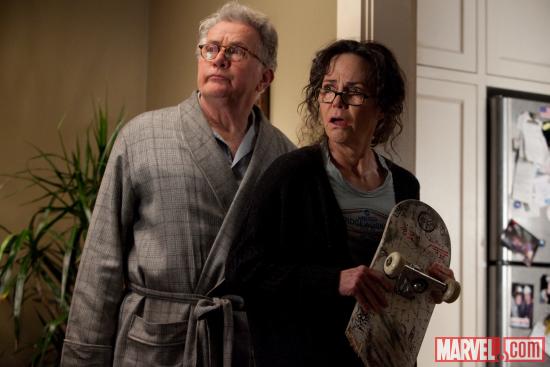
Even though he doesn’t have a mom and dad, Peter has Uncle Ben and Aunt May, and in this film, Gwen’s dad Captain Stacey. These three model healthy adulthood for Peter, and help him navigate his transition into Spider-man/adulthood.
- Ben – both in word and example – teaches Peter that being an adult means taking responsibility for your actions. Uncle Ben’s murder drives every incarnation of Peter Parker, and this one’s no different. But this film does better than many Spidey-stories of showing us a Peter who’s not motivated just by guilt, but by his love for his uncle.
- In the wake of Uncle Ben’s death, Peter goes hunting for his killer. Interestingly enough, this is the first Spidey-origins story I know of where Peter never finds the killer. Instead, he’s confronted by an insight from Captain Stacey, who’s trying to catch Spider-man: While Peter is telling himself he’s protecting the innocent, he’s really just seeking revenge. This insight helps Peter to learn that Justice and Revenge aren’t the same thing. Peter can be Spider-man without avenging Uncle Ben.
- Though she’s about the only person who doesn’t figure out his secret identity, May can’t help but notice all Peter’s sneaking around. Though she doesn’t know what’s going on, she warns him: Secrets have a cost. Peter thinks that he can just be Spider-man and continue to live his life. But Captain Stacey’s death teaches him that his choices have real consequences. May warns Peter that he can’t have his cake and eat it too. And though at first it seems Peter has learned his lesson – he honors Captain Stacey’s dying wish, in the final scene, we see he hasn’t really learned.

So does Peter become an adult? Is he Spider-man now? Not quite.

moments in all of comics
Captain Stacey warned Peter that choosing to be Spider-man would bring pain to those closest to him. He warned Peter to stay away from Gwen out of respect for their mutual love for her. But – in true adolescent fashion – Peter decides he can’t keep that promise no matter how hard he tries because, to quote Woody Allen, “The heart wants what the heart wants.”
Even those who don’t know how Gwen’s story ends can guess it’s not a happy one. Peter will suffer because this lesson doesn’t stick.
Overall, The Amazing Spider-man is a good film. What we love most about Spider-man is the characters. And the characters in this film are simply outstanding. Sure I’d have preferred more fight scenes to another Peter-discovers-his-powers montage, but if the sequels are half as good as they should be, then The Amazing Spider-man was well worth it.
All-in-all, this film is a perfect first chapter in Spider-man’s story. Peter will continue to grow up, to relearn each of those lessons, pay for them in blood and tears.
We younger generations need Spider-man. We need to learn the high cost of adulthood, that we can’t stay children (or adolescents) forever. At some point, we all have to ask, Who Am I? And when we embark on that journey, there’s no better teacher than Peter Parker.
Bottom Line: A fun, funny and surprisingly good restart for a beloved character. This is Spider-man for the new generation, and a solid foundation for great sequels.
YOUR TURN: What did you think of the film? How do they compare to Rami’s trilogy? Are you excited for more Andrew Garfield?
BONUS: I’d be remiss if I didn’t list what the film got oh-so-right my little nerd heart skipped a beat:
- Osborne is omnipresent but unseen. Osborne’s presence is inevitable in Spidey’s world, but the film handled him well.
- Peter’s not a photographer for the Daily Bugle… yet. But we get some glimpses that he might just aspire to such a hobby.
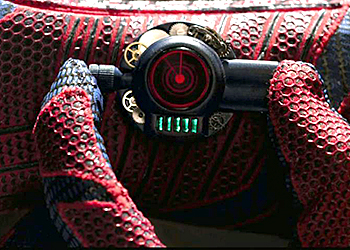
- Home-made web-shooters! And web fluid!
- Spidey’s pretty funny. In this film, the humor is more arrogance/teen boy, but the potential’s there for sure. Peter just needs a bit more tragedy.
- You can’t have Spider-man without his massive guilt complex. And Garfield nails it.

6 replies on “What It Means to Be a (Spider-) Man”
I LOVED this movie. It is a little soon after the Rami’s trilogy to have another origin movie, but I, unlike you, found the powers-learning montages to be some of the best scenes in the movie. I could barely wipe the smile off my face as he got into an accidental fight on the subway or ripped the keys off his keyboard. The Rami incarnation had some fun moments (like “Go webs!” or smashing into a billboard on his first swing attempt), but I think this version did it much better, which it needed to be since, after years of other excellent superhero movies since the first Spider-Man, it’s not our first dog and pony show. I also thought that this version really nailed the awkwardness of the way high schoolers talk to each other: Peter trying to ask Gwen out on a date reminded me of high school (and not in the angsty way high school can often be portrayed). Overall, I thought the movie was wonderful, and Andrew Garfield was one of the biggest reasons. I’m really looking forward to seeing him in more films (both Spider-Man and otherwise, since I also thought he was great in The Social Network).
It’s not that I didn’t like those parts… but if I could’ve traded those for some truly excellent battle sequences, filled with Spidey-quips, I’d have done so in a heart-beat.
Glad I’m not the only one who liked it 😀
That’s true. They did a good job with the quips, but I think they could have thrown in more. Read any fight scene panel in the comics and it’s filled with Spidey speech bubbles. Maybe they were worried that that didn’t seem realistic?
Also, maybe this is dumb since it’s a movie about a guy who can climb walls and catch flies without looking, but the most unrealistic thing about Spider-Man, in the comics, but especially in films, has always been the fact that a 17 year old can sew such a sweet costume. For some reason, I can suspend my disbelief about the webshooters, but not for the costume. You get that feeling, too?
I agree with all of what Scott and JR said. Mostly glowing review. The two shallow points for me were Ben and May. Martin Sheen slowly became an uncle Ben, but Fields was terrible. She had the inversion of Kristen-Stewart-Face the entire time. Perhaps Fields will be more comfortable in the sequel.
Agreed… I LOVED Sheen as Uncle Ben, but I thought May was pretty weakly written. Hope they give Fields more to work with in the future.
I’m sorry, but if my son (or nephew who I raised for over a decade as a son) comes home (repeatedly) with bruises and cuts all over his face, I’m not going to let him just storm off to his room. That’s not the ball-busting Aunt May I remember from the comics (especially the Ultimate incarnation).