

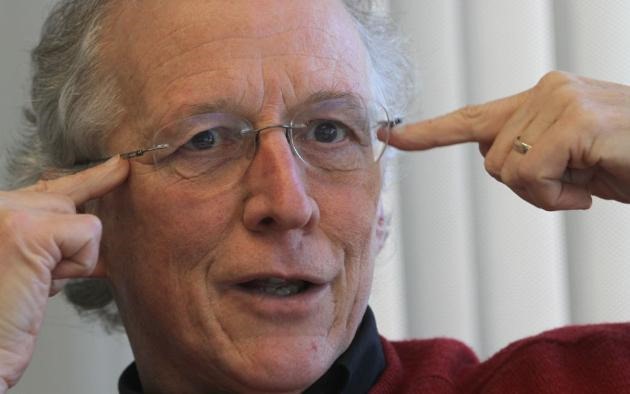
Neo-Calvinist Godfather John Piper made waves again a couple of weeks ago when he posted a 12-minute episode on his Ask Pastor John podcast concerning Game of Thrones. A listener asked if – given the show’s infamous nudity – a Christian person should watch. Piper’s response was a resounding No. (You can find a transcript of the episode here.)
“The closer I get to death and meeting Jesus personally face to face, and giving an account for my life and for the careless words that I have spoken (Matthew 12:36), the more sure I am of my resolve never intentionally to look at a television show or a movie or a website or a magazine where I know I will see photos or films of nudity. Never. That is my resolve. And the closer I get to death, the better I feel about that, and the more committed I become.”
Piper goes on to challenge all Christians to join him in not watching as a holy witness. He packages this challenge as a series of questions:
“Here are 12 questions to think about, or 12 reasons why I am committed to a radical abstention from anything I know is going to present me with nudity.”
It probably goes without saying that these are not honest questions, of the kind Matt Lee Anderson invites us to ask. But they do give us a window into Piper’s understanding of holiness and our Christian interaction with the world.
What’s not up for debate is whether Game of Thrones uses nudity artistically. No one thinks the nudity in the show is artistic.
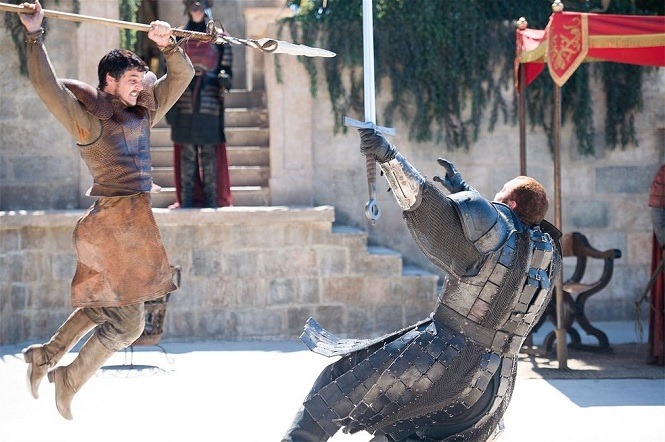
No one. Not Christians. Not Saturday Night Live. Not College Humor. (Those last two links are NSFW). Christians and non-Christians agree the show makes terrible choices when it comes to presenting the female form. So no one in this conversation (that I’m aware of) is defending the show’s use of nudity.
(There’re some other discussions that would be helpful were this the case – like “What counts as good use of nudity?” and “Does seeing a nude person automatically lead to lusting?” But given the tenor of the larger cultural discussion of Game of Thrones’ use of nudity, those aren’t part of this particular conversation.)
So the question is not, “Is the nudity good or bad?” The question is, “Given the bad use of nudity, should Christians avoid the show?”
Piper says Yes. He assumes the mere presence of nudity in a show negates any other positive potential a show like Game of Thrones has. In Piper’s analysis, the unholiness of nudity contaminates the whole of the project.
Is this a workable model of holy engagement in the world?
No – it’s a model of holy disengagement. If we apply Piper’s logic consistently (which he himself doesn’t), there’s little we could realistically participate in. Piper claims that nudity is fundamentally different from violence because,
“Nudity is not like murder and violence on the screen. Violence on a screen is make-believe; nobody really gets killed. But nudity is not make-believe.”

Since when has whether something’s “make-believe” determined whether it’s holy? If Piper were consistent in his Don’t-Do-It-If-It’s-Not-Holy ethic, surely violence would be included as well. But wouldn’t foul language – also condemned in Scripture? What about broken families or disobedient children – a staple of American sitcoms.
But why stop there? Does holiness buy products produced under unethical conditions? Or eat food that’s not ethically produced? I could belabor the point, but surely it’s obvious: the ethic Piper’s 12 questions implies isn’t something Christians realistically apply. Were we to, we would certainly be an unusual community. But outside of monastic communities, Christians don’t actually do this.
But should we? Isn’t Piper’s point – that we should live lives of holy disengagement – the way Jesus calls us to?

No, actually. The sort of holy detachment Piper describes looks much more like the Pharisees of Jesus’ day than Jesus himself. The Pharisees were those who kept themselves detached from the larger “sinful” culture, who created a holy subculture in which their religion could be protected and safe.
Jesus, on the other hand, engaged the broken culture around him and brought healing. He was a change agent, a catalyst for good in the midst of bad. Jesus didn’t see holiness as something to be protected, but as something dangerous. Jesus embraced the broken world around him fearlessly, confident that the world couldn’t contaminate him, that in fact he would contaminate them with the boundless, omnipotent love of God.
So what does that mean for Game of Thrones?
I’m happy to follow Paul’s advice in Romans 14 and 1 Corinthians 8, and allow it to be a matter of conscience. To those who say they can’t watch Game of Thrones because of the nudity, I will offer the books. I will certainly not insist they must watch. But those whose conscience is clear, who enjoy the myriad other profound and poignant meditations on God, human nature and morality the show offers, I say watch on.
Paul specifically chides us not to judge those believers who have different convictions than we do. If a weaker believer doesn’t feel comfortable watching nudity, good. If a stronger believer can watch a show like Game of Thrones and separate the good from the bad, good. To each their own, to paraphrase Paul. Let the Spirit guide us all.

11 replies on “Does Watching Game of Thrones Make You Unholy?”
Great points. I agree with where you landed. I personally am the weaker brother in this case and can’t watch it. My wife loved the books.
Would you read the books at any point, @playdoughman:disqus?
Spot on. Great post.
JR., I think you know that I watched (most) of the first episode and just couldn’t finish it. I read several of the books, but the show just seemed like a 14 year old was writing it (which I think is what SNL says, too). It wasn’t the nudity so much as the constant, flagrant, puerile adolescent choices being made in when and how to include nudity. It annoyed me in the same (?) way bad writing annoys me: it distracted from the story.
Having said that, here’s an honest question (and I don’t know, like I said, I haven’t seen it since part of ep. 1): Given that it doesn’t automatically sully our holiness, is it a justice issue? What I mean is, does the encouragement to HBO to continue to make this show and shows like it some sort of participation in the degradation of women or encouragement toward rape culture?
I think that’s a MUCH better question to ask regarding the show, and one again the larger culture is asking. I think a strong case can be made that the show is subverting some of those ideas as often as it’s contributing to them. And I’m certainly glad the conversation is happening. I’d rather be a part of it than sit on the sidelines.
Great post. Really love reading this kind of stuff.
Unrelated: I don’t think the show is exactly high-minded with its use of nudity. However, I do think that it’s less a “dudes will love THIS scene” and more of something towards maybe a thematic representation of the state of the world in regards to women?
Said a better way, it’s hard for me to think that the show is really well done and intelligent in the way it deploys certain ideas while at the same time relegating it to something like The Man Show in certain spots. It certainly indulges the “sex sells” idea. BUT, I do think that there is a larger purpose to its inclusion. Does that make any sense?
But seriously though, great read.
@rkmccoy:disqus I know what you mean. And that raises the issue @mattmikalatos:disqus is getting at: Does depiction equal approval? I think GoT has mixed success in this – sometimes it’s doing a good job of subverting what’s going on (Dany’s relationship with Drogo), and other times it wildly misses (as when Cerci “becomes consensual”).
Let me start by saying this is a great post. I would like to push a little on the line “To those who say they can’t watch Game of Thrones because of the nudity, I will offer the books.” Is the visual depiction of nudity really worse than a detailed and graphic description of it? Can’t reading about it fill one’s mind with images and lustful feelings as much as seeing it? It is interesting that there is so much discussion of the scenes in the show and not of those is in source material.
Well, @seandepass:disqus that is a great point. The books do get a little steamy, though not as bad as some other stuff I’ve read. I think it’s fair to offer warnings about both and let each person make up their own minds.
I fundamentally disagree with this article–from the opening line which seems to use the label “neo-Calvinist godfather” in a derogatory manner, to the closing paragraph which seems to indicate that the opening line should have never been written. Jesus took issue with Pharisaical legalism because of how it turned it’s back on sinners, not because the pursuit of holiness leads to disengagement. It’s clear to me that the idea that nudity presents a moral dilemma is far from being a newly invented construct–from the moment Adam and Eve first ate the fruit in the garden, to David’s trouble with Bathsheba, to Christ’s emphasis that adultery simply requires looking on a woman lustfully (which is the only logical connection I can find to Christ’s warning about allowing your eye to cause you to stumble), to Paul’s repeated emphasis on avoiding any hint of sexual perversion. These verses recognize the fact that sexual sin, more than any other, has the capacity to get a swift stranglehold on a man’s heart that sweeps God to the periphery.
The most dangerous trap is one that’s wrapped up in something enticing, entertaining, even good–it gives us the ability to quickly justify something that we know to be wrong; it gives us something to hide behind. Temptation doesn’t typically show up in a clear choice, “Should I worship Satan, or should I worship God?” Satan is called out as a deceiver because he plays on our tendency to rationalize. We’re called to think on what is pure and what is good for good reason–a heart that keeps surrender at the forefront is far better able to love and respect others in the way that Christ intended. We should always be asking ourselves whether what we are filling our hearts with is in line with who God wants to shape us into. God did not give Christians a “to each his own” approach to holiness or accountability; if He did, why do we still have pastors in the pulpits, attempting to convey truths and insights that go beyond their own immediate lives?